
The first website ever published went live on August 6, 1991. It had no images. No colors. No fonts. Just plain black text on a white screen. And yet, that single page quietly changed everything about how humans share information. Most people have never seen it. Fewer still know the strange, almost accidental story behind it.
The First Website and the Man Who Built It
Tim Berners-Lee launched the first website from a lab in Switzerland. He worked at CERN, the particle physics research center near Geneva. His job had nothing to do with building the internet. He was trying to solve a much smaller problem.
A Personal Frustration That Changed the World
Berners-Lee was frustrated with how scientists shared information. Researchers would leave CERN. Their knowledge would disappear with them. He wanted a system to keep that knowledge alive. So in 1989, he wrote a proposal called Information Management: A Proposal. His boss scribbled “vague but exciting” on the cover. That was enough. He got the green light to keep going.
The Machine That Hosted It All
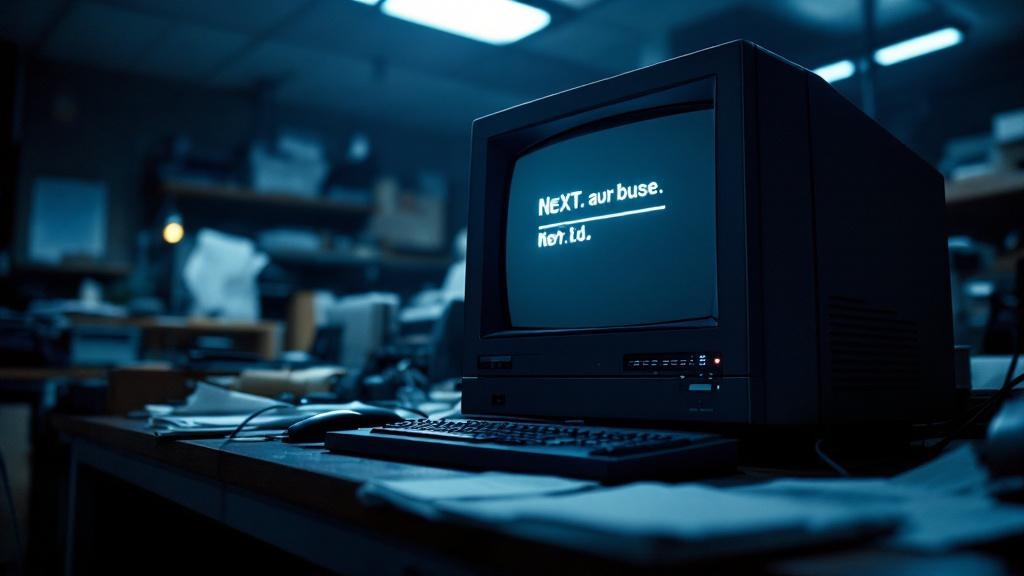
The first website ran on a NeXT computer. It was a sleek black cube made by Steve Jobs’ company after he left Apple. Berners-Lee stuck a handwritten note on the machine. It said: “This machine is a server. Do NOT power it down!” That computer is still on display at CERN today. It literally held the entire World Wide Web on its drive.
What the First Website Actually Said
The first website explained what the World Wide Web was. It described how to use hyperlinks. It told visitors how to set up their own web servers. In short, it was a manual for building the web — published on the web itself. That is a beautiful kind of logic.
No Password. No Login. No Fee.
Anyone could visit the site for free. There was no account to create. No data to hand over. Berners-Lee made a point of keeping it open. He also pushed CERN to release the web technology royalty-free in 1993. That single decision is probably the most important one in internet history. It meant anyone could build a website. No permission needed.
The URL That Still Works Today
Here is a surprising fact. The original URL still works. CERN restored it in 2013 as part of a preservation project. You can visit info.cern.ch right now. It looks exactly as it did in 1991. No redesign. No updates. Just the raw text that started everything. Visiting it feels like touching a piece of digital archaeology.
Why This First Still Matters So Much
Today, there are over 1.9 billion websites online. That number changes every second. But every single one of them traces back to that plain CERN page. The first website set the rules. It showed that a web page should be open. It should link to other pages. It should be readable by any machine. Those ideas never changed. They just scaled beyond anything Berners-Lee imagined.
The First Website Had No Analytics
There was no way to count visitors. No click tracking. No heatmaps. Nobody knew how many people read the first website. Berners-Lee later said that was probably a good thing. He was not chasing numbers. He was building something useful. That mindset shaped the early web deeply. It is a lesson that still feels relevant. At KREAblog, we think about these origins often.
One Man’s Idea vs. a Corporate Patent
What if Berners-Lee had patented the web? Experts estimate it would have been worth trillions of dollars. He chose not to. He gave it away. That is not a small fact. That is arguably the most generous act in tech history. The web grew because it was free. And because it was free, it grew faster than anyone expected.
The Legacy Hidden in Plain Text
People often assume the first website must have been impressive. It was not. It was humble and practical. But that is exactly the point. It did not try to look good. It tried to work well. And it did. Every social platform, AI tool, and design blog — including KREAblog — exists because of that plain white page.
The first website also proved something important. You do not need a big budget or a powerful team to start something that lasts. One person with a clear idea and the right timing can shift the entire direction of human communication. That is not a cliché. That is literally what happened in a Swiss physics lab in 1991.
So next time you open a browser tab, take a second. Think about that black text on a white screen. Think about the handwritten note on a black cube. The whole digital world you live in every day grew from there. And it all started because one scientist was annoyed that people kept forgetting things. Funny how that works.
For more stories about the moments that quietly built our digital world, keep reading KREAblog. The best firsts are always the ones nobody saw coming.
This article is for informational purposes only.