

The first live chat system ever built online didn’t come from Silicon Valley. It didn’t come from a startup flush with venture cash. It came from a university computer lab in the early 1970s. And the people who built it had no idea they were inventing something that would one day power billions of conversations every single day.
That’s the thing about real innovation. It rarely looks like a big moment. It looks like a weird experiment nobody quite understands yet.
Live Chat Before the Internet Existed
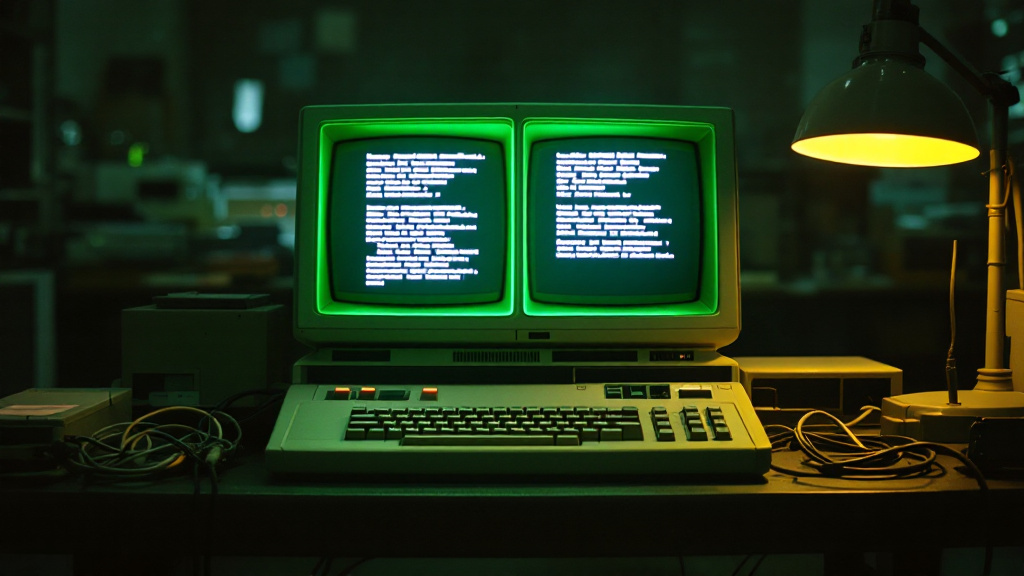
Most people assume live chat started somewhere around AOL Instant Messenger. That’s wrong by about two decades. The actual origin goes back to 1973. A program called TALK ran on UNIX systems. It let two users on the same computer network type to each other in real time. Each person’s screen split into two halves. Your words appeared on the bottom. Their words appeared on the top.
It sounds basic. But think about what that meant. For the first time, two humans could hold a written conversation without any delay. No letters. No telegrams. No phone calls. Just typed words, moving instantly between two people sitting at different machines.
The Split-Screen That Started It All
The split-screen design wasn’t an accident. The developers wanted both people to type at the same time. That was radical. Phone calls forced you to take turns. Live chat didn’t. Both parties could type simultaneously. That tiny design decision shaped every messaging app that came after it.
Even today’s chat interfaces echo that logic. You see a “typing” indicator while the other person types. That idea traces a straight line back to TALK’s split screen.
The Network That Made It Possible
TALK worked inside ARPANET, the military research network that later became the internet. But it was truly internal at first. Users had to be on connected university systems. MIT, Stanford, and UCLA were among the first places where people sent live messages this way. So the first live chat users were mostly researchers and graduate students. Not exactly your average WhatsApp demographic.
Even so, adoption spread fast. By the late 1970s, UNIX’s TALK command was considered a standard tool. People used it for quick questions between lab colleagues. Some used it to coordinate shared computing tasks. A few, inevitably, used it to flirt.

When Live Chat Went Public
TALK stayed inside universities for years. The public didn’t get a version until bulletin board systems, or BBS, started offering chat rooms in the early 1980s. These were dial-up systems. Users connected through phone lines. Speed was painfully slow. But it worked. And people loved it.
The first major public live chat room launched on CompuServe in 1980. It was called CB Simulator. The name was a direct reference to citizens band radio, the kind truckers used. CompuServe’s founders knew their audience. They pitched CB Simulator as a digital version of radio chatter. It became one of the platform’s most popular features almost immediately.
The Accidental Social Network
CB Simulator created something nobody planned. It built communities. People returned daily to talk to the same strangers. They formed friendships. Some planned meetups. A handful of couples met there and later married. This was 1980. The concept of “meeting people online” didn’t even have a name yet.
That social gravity — that pull to return and connect — is exactly what every platform chases today. KREAblog has covered how design drives behavior online. Live chat was one of the earliest proofs of that idea. The design of a simple text box created an entirely new kind of human relationship.
IRC and the Real-Time Revolution
Then came IRC. Internet Relay Chat launched in 1988. A Finnish student named Jarkko Oikarinen built it in a single summer. He wanted a better way to communicate on the university’s BBS system. What he built instead was a global, real-time chat network. Within a year, IRC had spread across dozens of countries. During the Gulf War in 1991, journalists used IRC to share live updates. It was faster than television. That moment showed the world what live text could do under pressure.
IRC had no company behind it. No funding. No growth team. It grew because it was useful and free. That’s a lesson the tech industry keeps relearning every decade or so.
Why This First Still Matters
Here’s the part worth sitting with. Every customer support window you’ve ever used is a descendant of TALK. Every Discord server owes something to IRC. Every Slack channel, every WhatsApp thread, every live comment section on a stream — all of it traces back to a split-screen terminal program built in 1973.
Live chat didn’t just create a new communication tool. It created a new communication instinct. People now expect instant written replies. Waiting 24 hours for an email feels rude. That expectation didn’t exist before live chat made immediacy feel normal.
The design decision to make text instant changed what people expect from each other. That’s not a small thing. That’s a fundamental shift in human behavior, started by a few university programmers who just wanted a faster way to send a message down the hall.
Who knew a split screen would split history in two?
This article is for informational purposes only.