
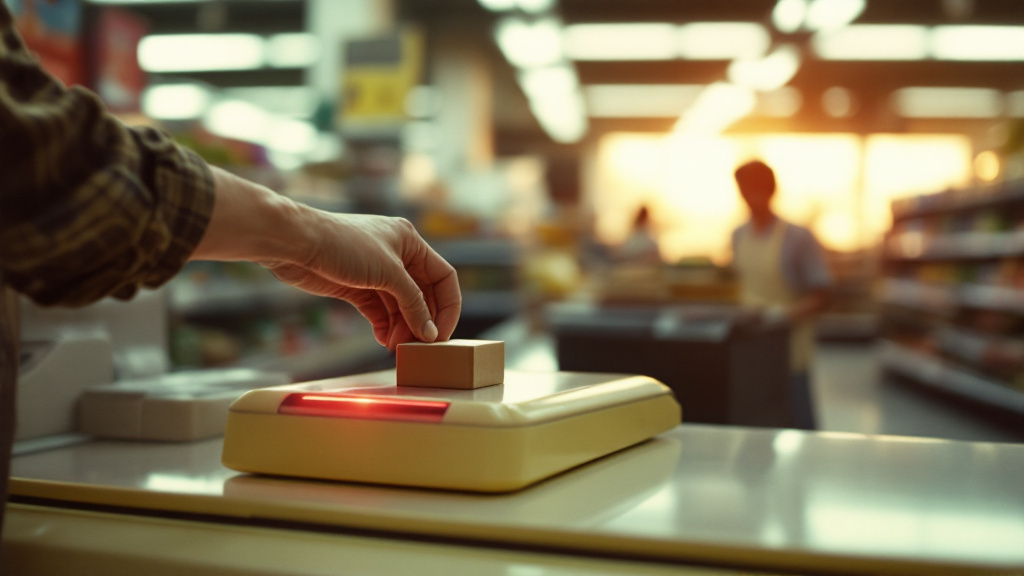
The very first barcode scan in retail history happened on a single pack of Wrigley’s Juicy Fruit chewing gum. It was June 26, 1974. A cashier at a Marsh supermarket in Troy, Ohio, dragged that small pack across a laser reader. A beep sounded. A receipt printed. Nobody in the store fully understood what had just happened. But that quiet moment quietly rewired the entire global economy.
Most people assume barcodes were always part of shopping. They weren’t. For decades, cashiers manually punched every price into a register. It was slow. It was error-prone. It was expensive for stores. And it drove inventory managers absolutely mad. So, the pressure to find something better had been building since the late 1940s.
Where the Barcode Scan Idea Actually Came From
Here’s the part most history books skip. The original inspiration came from Morse code. In 1948, a graduate student named Bernard Silver overheard a supermarket executive begging a dean to research automatic checkout. Silver told his friend Norman Woodland. Woodland became obsessed. He couldn’t let it go.
A Beach, Some Sand, and a Big Idea
Woodland quit his teaching job. He moved to his grandfather’s Florida apartment. He sat on the beach and dragged his fingers through the sand. He extended Morse code dots and dashes downward into long thin lines. That gesture — fingers in sand — became the blueprint for the modern barcode. It sounds almost too poetic to be true. But it happened exactly like that.
Woodland and Silver filed a patent in 1949. However, the technology to actually read their design didn’t exist yet. Early prototypes used a 500-watt incandescent bulb. It nearly set the test groceries on fire. The idea was right. The tools were just not ready.
The Long Wait Before the Beep
It took over two decades to go from patent to product. Lasers changed everything. By the early 1970s, laser technology had matured enough to scan reliably. A consortium of grocery industry leaders formed a committee. They needed a single universal symbol. Everyone had to agree. That’s harder than it sounds in a competitive industry.
IBM engineer George Laurer ultimately designed the Universal Product Code symbol we still use today. His bull’s-eye design lost out to the rectangular lines. But his engineering made the whole system work. The committee approved it in 1973. Stores needed a full year to install the equipment. Then came that gum pack in Ohio.
Why That First Barcode Scan Almost Failed
Retailers were deeply skeptical. Installing the scanners cost a fortune. Early machines cost roughly $200,000 each in today’s money. Grocers weren’t convinced the payoff was real. Consumer groups were suspicious too. Some activists feared that removing price tags from individual items would let stores secretly overcharge shoppers. There were actual protests outside supermarkets.
The Numbers That Finally Won Everyone Over
Adoption was painfully slow at first. By 1977, only about 200 stores in the entire United States had scanners. But then the data started coming in. Checkout speeds doubled. Shrinkage dropped. Inventory accuracy went through the roof. A 1980 study by McKinsey found that widespread barcode use could save the US grocery industry over $17 billion annually. That number got everyone’s attention fast.
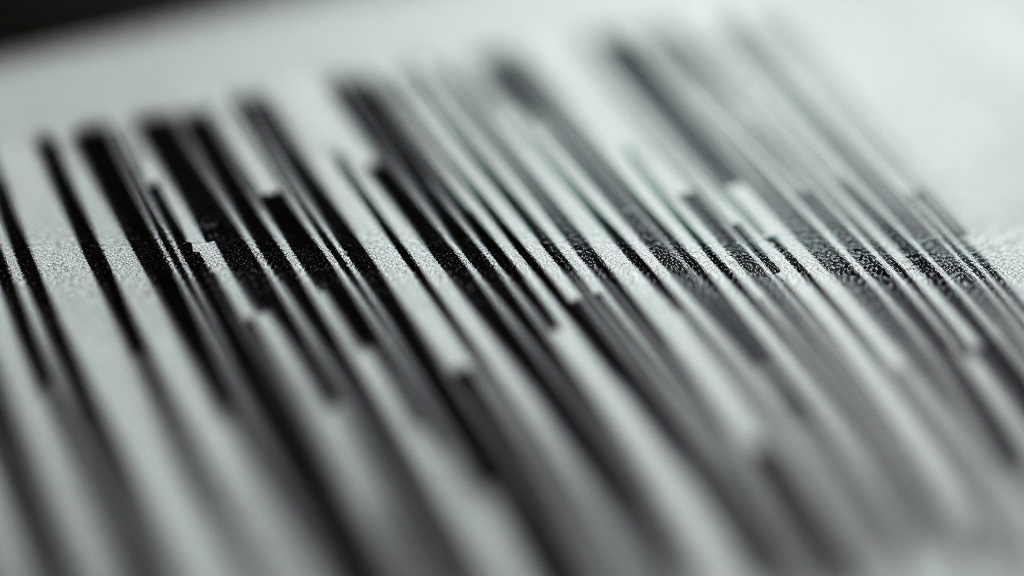
Also, for KREAblog readers who love design history, here’s a great detail. The barcode’s quiet visual language — those stark black lines on white — became one of the most printed graphics in human history. No designer sat down to make it beautiful. Yet it ended up on billions of products worldwide. Function became its own aesthetic.
The Gum Pack That Went to a Museum
That original Juicy Fruit pack? It’s now in the Smithsonian Institution’s National Museum of American History. The receipt from that first transaction sits right beside it. The cashier’s name was Sharon Buchanan. She has said in interviews that she had no idea she was making history. She just did her job. That’s often how the biggest moments happen.
The barcode didn’t just speed up checkout lines. It completely changed how supply chains work. Manufacturers could now track what sold, when, and where. Stores could reorder automatically. The concept of real-time inventory was born from that single beep in Ohio. Every modern warehouse system, every logistics network, every e-commerce fulfillment center traces its logic back to that moment.
What the Barcode Made Possible Next
The barcode scan model inspired everything that came after. QR codes are essentially barcodes with more data capacity. RFID chips are barcodes without the need for line-of-sight. Even the way social media tracks content engagement borrows from the same core idea — tag it, scan it, count it, act on it.
Think about that the next time you tap your phone at a checkout. You’re using a direct descendant of one man’s fingers dragging through Florida beach sand. The chain from that moment to now is unbroken. And it all started with a beep, a receipt, and a pack of chewing gum that someone thought to save.
The barcode scan remains one of the most underrated design and engineering achievements of the 20th century. It didn’t come from a famous lab. It didn’t have a dramatic launch event. It just quietly worked. And then it changed everything.
This article is for informational purposes only.