


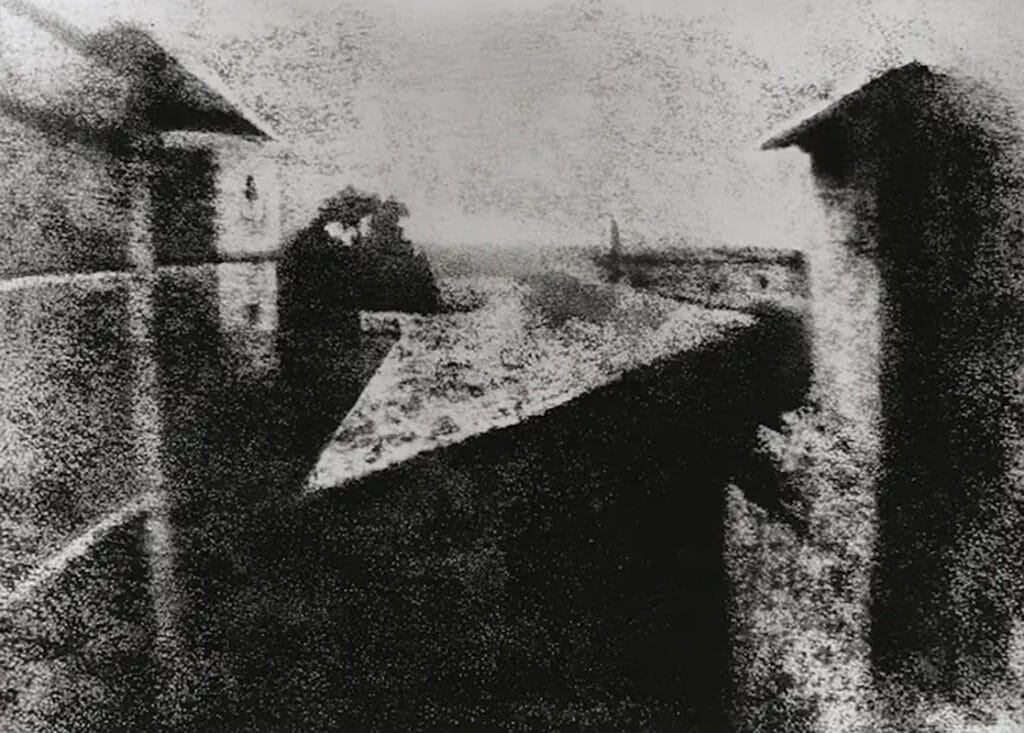
Have you ever wondered about the history of photo, which we all take dozens of photos in seconds today? In this article, we would like to give you information about the first photograph and camera in the world. The first photograph was taken in the 19th century and revolutionized the world. Joseph Nicéphore Niépce took the first permanent photograph in history in 1826. The photograph was prepared with the “Heliography” method. This method aimed to stabilize the image using light-sensitive materials. Niépce took an eight-hour exposure to obtain the photograph. The image showed the outside from the window of a house. Photography was unknown at the time. Niépce’s discovery therefore aroused great interest. Today, the photograph is on display in a museum in Paris.
The advent of photography excited scientists and artists at the time. Images that previously could only be produced by painters and engravers could now be created by a mechanical system. However, this process was quite laborious and did not appeal to the masses. For photography to become widespread, technology needed to develop further. Niépce’s method was the first big step on the road to today’s photography.
At the time, people wondered how this new invention could be used. As they studied the details of the first photograph, they thought that in the future, images could become permanent. Niépce’s shot was not just an image, but an indication that the way humanity stored its memories would change. Photography came to be seen as a way to fix reality and stop time. This invention is considered one of the most important discoveries in history.
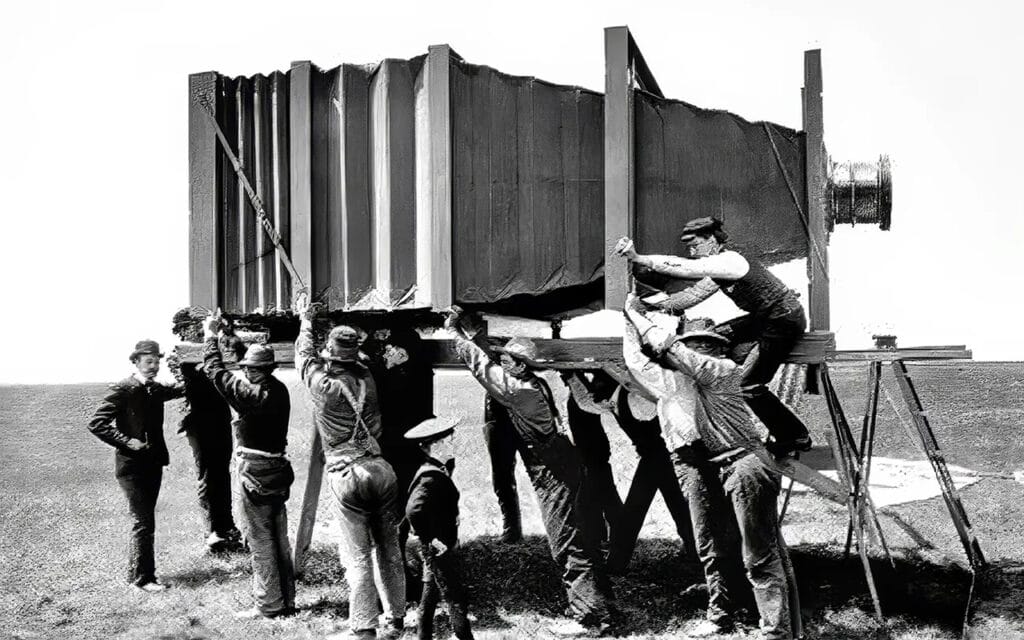
The World’s First Camera and Its Working Principle
The first camera had a simple structure and worked with light. Niépce developed a system called camera obscura. The camera obscura allowed light to pass through a small hole and fall on the surface. Niépce used a bitumen-coated plate to stabilize this image. Bitumen is a substance that hardens when exposed to light. When the exposure time was complete, it was washed away to reveal the image. This primitive system formed the basis of photography. Later, Louis Daguerre improved this technique, making it more practical. Camera obscura was actually based on a principle known for centuries. During the Renaissance, painters used this technique to create accurate perspective. However, Niépce was the first to use this principle to create a permanent image.
The method he developed laid the foundation for the cameras used today. The first camera was heavy and cumbersome. However, it offered a great innovation because of its ability to fix the image on a surface.
The camera underwent major changes in the following years. First, the exposure time was shortened. Later, chemical processes were improved and images became clearer. Today, digital sensors and advanced lens technologies are used. But the basic principle is still the same: Light is dropped onto a surface and made permanent. The first camera is considered the ancestor of today’s technology.
Daguerre and the Evolution of Photography with Developing Technology
Thanks to Daguerre, photography developed greatly and spread rapidly. Louis Daguerre took over Niépce’s work and developed a new technique. In 1839 he invented the daguerreotype method. This method used silver-coated copper plates to produce clearer images. Daguerre’s technique made photography accessible to everyone. The exposure time was significantly shortened. So people could take pictures in less time. Daguerre’s method was introduced to the world by France. This process led to the global spread of photography.
Daguerre’s method brought art and science together. Faces, landscapes and events that until then could only be documented by painters and sculptors could now be recorded by machines. This development led to a major change, especially in the art of portraiture. Photographs allowed people to express themselves more realistically. This process was recognized as the beginning of a new era in the art world.
This rapid development of photography also affected journalism. It became possible to document events and wars. The first documentary photographs began to visually record the history of societies. In addition to art, photography began to be used in fields such as science, medicine and astronomy. Daguerre’s invention revolutionized the preservation of visual memory.
The First Impacts of Photography on Society
Photography quickly entered human life and became influential in many areas. First of all, portrait photography became popular. People started having their portraits photographed instead of long portrait drawings. Photographs were also used in art and science. Archaeologists used photography to document excavation sites. Journalists began to report events in a more realistic way. With the spread of photography, memories became permanent. Families and communities turned to photography to preserve their memories. This contributed greatly to the development of visual culture.
Photography shaped collective memory as well as individual memory. Societies used photography to document important events. Wars, celebrations, inventions and discoveries were passed on to future generations through photographs. Photography has become not only a medium of art, but also a powerful tool of communication and documentation.
Today, thanks to social media platforms, photographs can reach millions of people in seconds. But this journey began with the first photograph taken in the 19th century. What started as a simple image of a house at the time has now turned into a visual revolution.
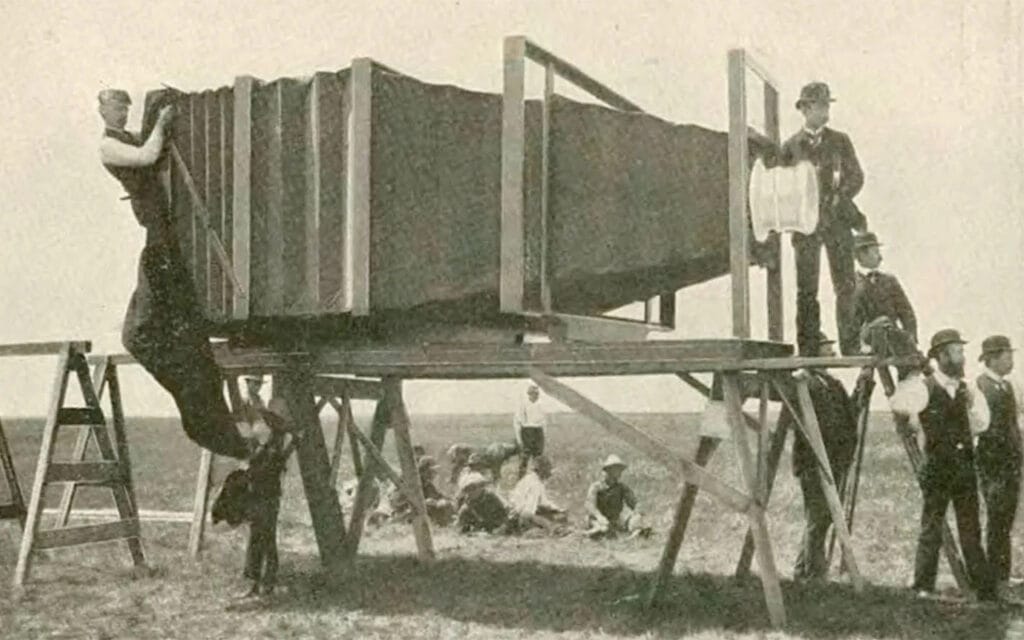
Where Photography is Today
Today, photography has reached a completely different point with digital technology. While the first photos were taken over a long period of time, now images can be recorded in seconds. Smartphones can take photos as good as professional cameras. Photo editing software allows images to be improved. Social media platforms have made photo sharing widespread. Now everyone can easily store their memories. With the development of technology, artificial intelligence-assisted photography has also gained importance. However, despite all these innovations, the importance of the first photograph is still preserved.
The high-resolution cameras used today carry the legacy of the first photograph taken in 1826. Photography is still growing and evolving. But the basic principle remains the same: To immortalize a moment. What do you think about the first photo and camera in the world?