

The First Barcode and the Pack of Gum
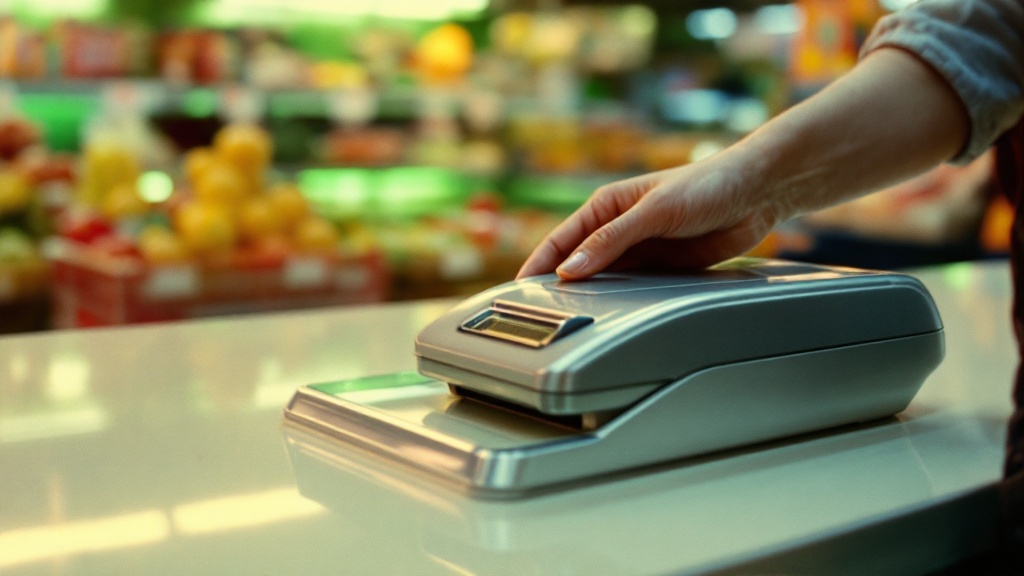
The first barcode ever scanned in a real store was on a ten-pack of Wrigley’s Juicy Fruit gum. That happened on June 26, 1974. The store was a Marsh supermarket in Troy, Ohio. Nobody there knew they were making history. A cashier named Sharon Buchanan ran the pack across a scanner. It beeped. The price appeared. Everything changed.
That pack of gum now lives in the Smithsonian Institution. It’s treated like a national treasure. And honestly? It deserves that. No single object better captures the moment retail became modern. Before that beep, every price had to be typed by hand at checkout. So errors were common. Lines moved slowly. Inventory was a nightmare.
But how did a striped black-and-white symbol end up changing how the whole world buys things? The story behind it is stranger than you’d think.
A Beach Drawing That Started It All
The idea didn’t come from a tech lab. It came from a beach. In 1948, a graduate student named Norman Woodland was sitting in the sand in Miami. He was thinking about grocery store inefficiency. He dragged his fingers through the sand. He created a series of lines. Suddenly, he saw it — a pattern that could encode information visually. He was inspired by Morse code, but stretched into bars.
Woodland filed a patent with his partner Bernard Silver in 1949. However, the technology to read those bars didn’t exist yet. The patent sat for years. It was eventually bought by RCA for next to nothing. Meanwhile, Woodland kept working. He believed in the idea completely. Even so, the world wasn’t ready yet.
The IBM Engineer Who Made It Real
The real push came in the early 1970s. The grocery industry was desperate. Checkout lines were slow. Labor costs were rising. So a group of retailers formed a committee to find a solution. They ran a competition. IBM engineer George Laurer won it. But Laurer didn’t just pick a random shape. He tested circles, bulls-eyes, and linear patterns. He finally chose the rectangle because it printed cleanly and scanned reliably. That rectangular shape became the Universal Product Code — the UPC. It launched commercially in 1974. And on that summer morning in Troy, Ohio, it worked perfectly on Juicy Fruit.
Why the First Barcode Mattered More Than Anyone Admitted
Here’s something retailers didn’t publicize loudly at first. The first barcode wasn’t really about speeding up checkout. It was about data. Every scan created a record. Stores suddenly knew exactly what sold, when, and how fast. That was revolutionary. For the first time, a supermarket could track inventory in near real time. Also, they could spot theft patterns and measure promotions accurately.
Suppliers noticed fast. They started using scan data to plan production runs. Manufacturers could react to real demand instead of guessing. The whole supply chain shifted. As a result, the modern concept of data-driven retail was born in that Ohio supermarket. It wasn’t called big data back then. But that’s exactly what it was.
The Unions Fought It Hard
Not everyone was thrilled. Labor unions pushed back strongly. Cashiers who typed prices were skilled workers. The scanner threatened their role. Some unions tried to block barcode adoption in the mid-1970s. They argued consumers would get overcharged without visible price stickers on every item. That concern was actually valid. Early scanning errors did cause overcharges. But retailers promised accuracy checks. Slowly, resistance faded. By the early 1980s, barcodes were everywhere.
The Quiet Design Behind the Stripes
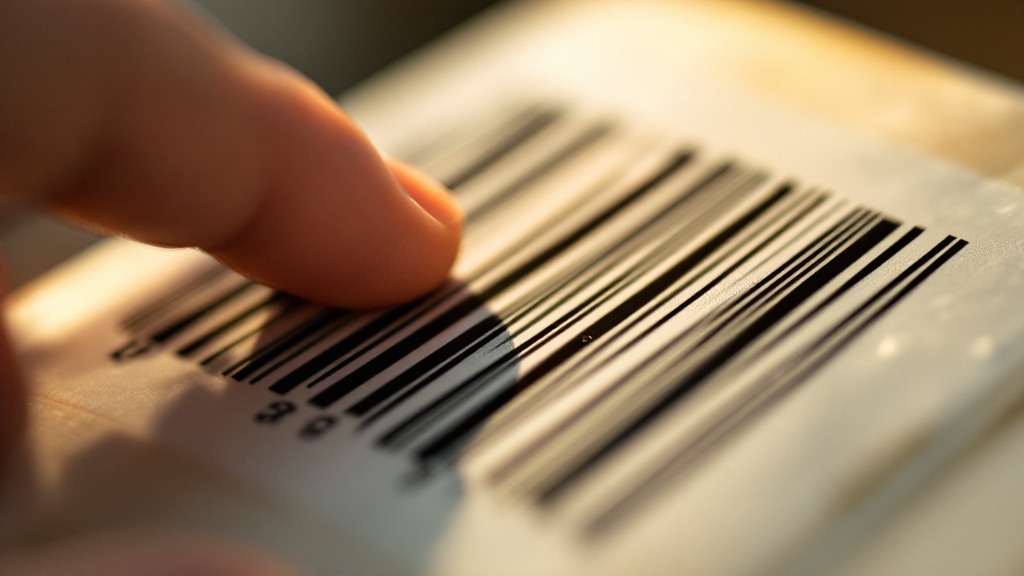
Most people never think about what the barcode actually looks like as a design object. But it’s clever. The bars encode numbers using widths and spacings. The human eye can’t read it. Yet a laser can scan it in milliseconds. The quiet numbers beneath the bars are actually a backup. A human can type them manually if a scanner fails. That redundancy was a deliberate design decision. Laurer built failure tolerance right into the visual system. That’s good design thinking, full stop.
The barcode also had to print well on cheap packaging. Early printing technology was inconsistent. So the design allowed for slight smudging without losing accuracy. Even imperfect barcodes scanned correctly. That robustness in real-world conditions is why it survived and spread globally.
From Gum to Global Infrastructure
Today, over six billion barcodes are scanned every single day worldwide. They appear on medicine bottles, blood bags in hospitals, library books, and airline boarding passes. The basic structure Laurer designed in the early 1970s still works. It hasn’t needed a fundamental redesign. That’s remarkable for any technology. Most systems become obsolete fast. But the first barcode format proved so well-engineered that it outlasted entire generations of tech.
Of course, QR codes and RFID chips now exist alongside it. Still, the original barcode never disappeared. It adapted. It scaled. It became invisible infrastructure — the kind you only notice when it fails.
Norman Woodland finally got proper recognition in 1992. He received the National Medal of Technology from President George H.W. Bush. He passed away in 2012. But his beach-inspired doodle from 1948 still runs through every checkout line on the planet. That’s the kind of legacy most designers can only dream about. Here at KREAblog, that’s the kind of story we live for — the quiet invention hiding in plain sight.
So next time something beeps at a register, remember. That sound started with a guy drawing lines in Florida sand. And a pack of gum in Ohio that changed everything.
This article is for informational purposes only.