

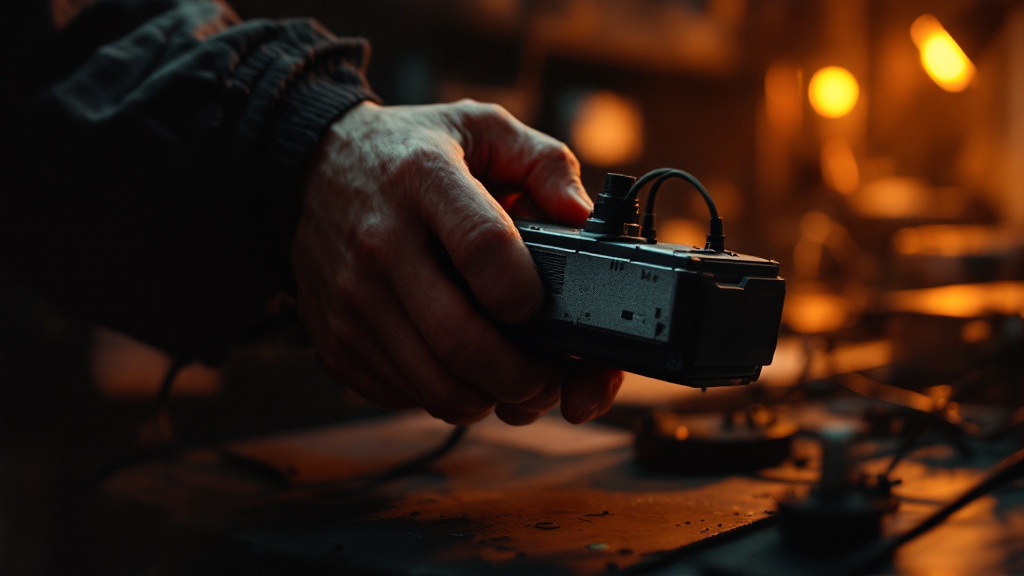
Haptic feedback is everywhere today. Your phone buzzes. Your game controller rumbles. But almost nobody knows where this all started — and the real story is far stranger than you’d expect.
The First Haptic Feedback Device and What It Actually Did
The earliest haptic feedback system didn’t come from a consumer lab. It came from a flight simulator. In the 1950s, engineers at Boeing and MIT were building training cockpits. Pilots needed to feel resistance in the controls. Real aircraft pushed back against the pilot’s hands. So the simulators had to do the same thing.
These early force-feedback systems used hydraulic actuators. They were massive, loud, and expensive. But they worked. A pilot could feel a stall, a dive, or turbulence — all without leaving the ground. That physical sensation was the first deliberate haptic feedback loop ever created for human-machine interaction.
The Man Who Named the Sensation
Most people credit Frederick Brooks Jr. with bringing haptic feedback into computing. Brooks worked at the University of North Carolina at Chapel Hill. In 1967, his team built the GROPE system. It let researchers feel molecular forces through a mechanical arm. That’s right — scientists could feel atoms pushing against each other. It was wild. It was also decades ahead of its time.
Brooks didn’t call it haptics then. That word came later. But the concept was his. He believed touch was a missing sense in computing. He was right, and it took the industry thirty more years to agree with him.
Why Nobody Took It Seriously for Decades
Here’s the irony. Force feedback was technically possible in the late 1960s. But it was too expensive and too bulky. The hardware weighed hundreds of pounds. It needed special rooms. So the idea sat quietly in university labs for years. Nobody outside academia cared — yet.
Haptic Feedback Breaks Into the Consumer World
The real turning point came in 1997. A game controller changed everything. The Rumble Pak — a small add-on device for a popular gaming console — put vibration feedback into millions of living rooms. Suddenly, haptic feedback wasn’t a lab curiosity. It was a toy. And toys reach people in ways that science never does.
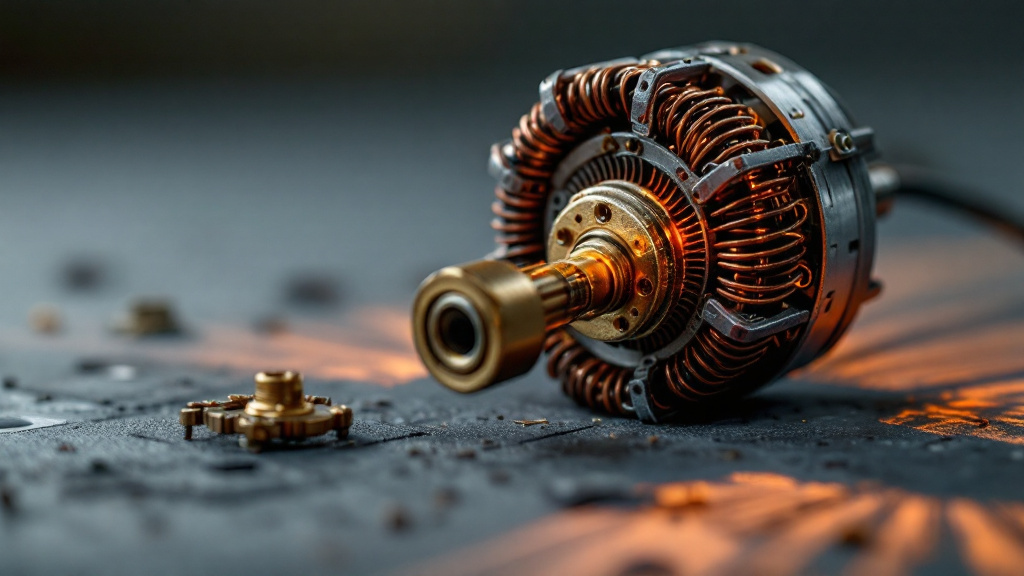
The device used an off-center weighted motor. It was simple, almost embarrassingly so. Spin the motor fast, and the controller shakes. That’s it. No hydraulics. No molecular simulations. Just a small spinning weight. But players loved it. They felt explosions. They felt crashes. Touch had entered gaming forever.
The Tiny Motor That Started a Revolution
The eccentric rotating mass motor — engineers call it an ERM — is still inside billions of devices today. Your phone uses one. So does your smartwatch. It’s been miniaturised down to a few millimetres. But the physics are identical to that 1997 controller. A spinning weight creates vibration. Vibration creates sensation. Sensation creates connection. That chain of cause and effect is essentially unchanged.
What changed is precision. Modern linear resonant actuators — LRAs — replaced ERMs in premium devices. LRAs vibrate in a straight line instead of spinning. They respond in milliseconds. They can mimic a click, a heartbeat, or a raindrop. The difference is astonishing. You’ve felt it if you’ve tapped a modern smartphone keyboard.
Haptic Feedback Finds Its Design Language
Here’s something designers rarely talk about. Haptic feedback has a grammar. Short buzz means confirm. Long buzz means alert. Double tap means error. These patterns didn’t appear by accident. Teams of UX researchers spent years testing which vibrations felt natural. They studied human nerve response times. They mapped sensation to meaning the way a graphic designer maps colour to emotion.
At KREAblog, we find that overlap between engineering and design endlessly fascinating. Haptics sits right at that crossroads. It’s physics serving feeling. It’s a machine learning to speak the language of skin.
What Haptic Feedback Made Possible — and What’s Next
Surgeons now use haptic feedback in robotic surgery. They feel resistance when a tool touches tissue. That sensation guides them. It saves lives. That’s a long way from a rumbling game controller.
Researchers are also building full-body haptic suits. These use dozens of actuators sewn into fabric. A person wearing one can feel a virtual raindrop on their arm. They can feel a virtual handshake. The military uses similar suits for remote bomb disposal training. The applications are genuinely extraordinary.
But what’s most surprising isn’t the technology itself. It’s how long it took the world to care. Haptic feedback was technically demonstrated in 1967. It sat ignored for thirty years. Then a small plastic add-on for a video game changed everything. Sometimes the biggest ideas need the most unexpected vehicle to reach people.
So next time your phone buzzes in your pocket, remember: you’re feeling the distant echo of a flight simulator, a molecular physics experiment, and a spinning weight in a plastic toy. That’s quite a lineage for something so small.
This article is for informational purposes only.