

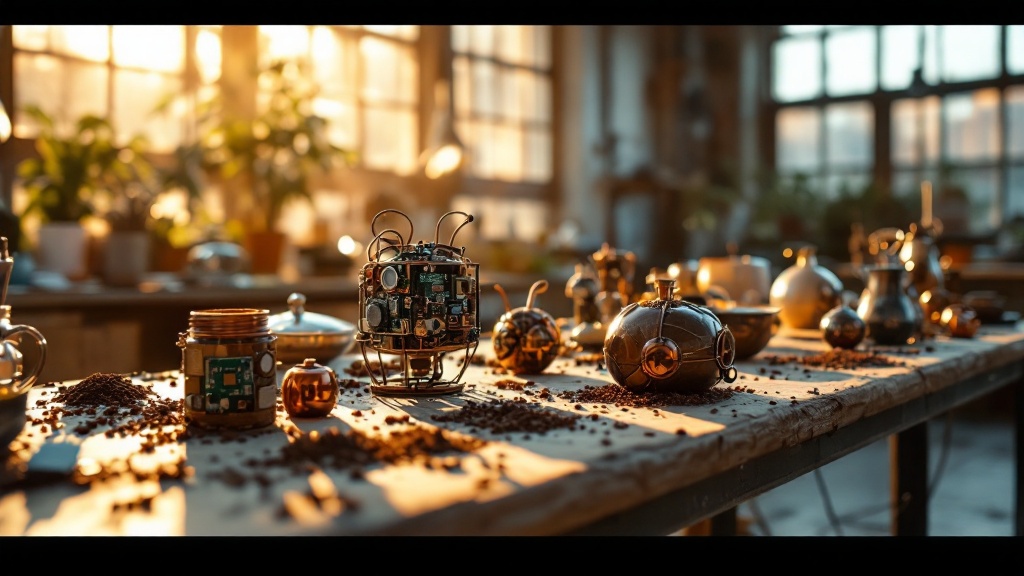
Waste materials are reshaping modern design in ways few predicted. What once headed for landfills now becomes furniture. Coffee grounds turn into lamp shades. Broken phones become sculptural art. This isn’t recycling as we knew it. It’s something far more interesting.
The design world loves talking about sustainability. But here’s the thing. Most “eco-friendly” design still feels like a compromise. You buy it because it’s green, not because it’s beautiful. That’s changing fast. A new wave of makers refuses to choose between ethics and aesthetics.
Why Waste Materials Matter More Than Ever
Let’s get real about the numbers. We produce billions of tons of waste yearly. Electronics alone create mountains of toxic garbage. Coffee production generates massive amounts of organic refuse. Traditional recycling catches only a fraction of this mess.
The Failure of Conventional Recycling
Here’s what recycling companies don’t advertise. Most plastic never gets recycled. It gets shipped overseas or burned. Paper degrades with each cycle. Glass is heavy and expensive to transport. The system was never designed to handle today’s volume. So designers started asking different questions. What if waste became the starting point, not the problem?
From Trash to Treasure
Coffee shells contain cellulose fibers. E-waste holds precious metals and durable plastics. Agricultural byproducts offer unique textures. These aren’t just “recyclable.” They’re genuinely valuable. The challenge is extraction and transformation. That’s where creative minds enter the picture.
However, working with waste isn’t simple. Each batch varies. Colors shift. Textures change. This unpredictability frustrates industrial production. But it delights artisan makers. Every piece becomes one-of-a-kind.
The New Aesthetic of Waste Materials
Something unexpected happened when designers embraced waste. They discovered new beauty. Coffee-based materials have warm, earthy tones. Recycled electronics create metallic accents impossible to replicate. Agricultural waste produces organic patterns no machine could design.
Imperfection as Feature
Traditional manufacturing worships uniformity. Every unit matches the next. Waste-based design flips this logic. Variations become selling points. Collectors pay premiums for unique pieces. The KREAblog team has noticed this shift across studios worldwide. Imperfection signals authenticity now.
Think about it differently. A coffee-ground table shows its origin. You can almost smell the morning brew. An e-waste sculpture carries digital history. These objects tell stories. Mass production never could.
Collectibility Changes the Game
Here’s a contrarian take. Sustainable design failed when it aimed for cheap replacements. Nobody treasures disposable goods, even eco-friendly ones. But collectible pieces? Those get kept. Passed down. Cherished. The environmental impact of one heirloom beats ten “sustainable” items thrown away.
Copenhagen’s design scene understood this early. Other cities are catching up. The market for waste-derived collectibles grows steadily. Galleries feature these works. Museums acquire them. This legitimacy matters enormously.
Challenges Nobody Talks About
Let’s be honest about the obstacles. Scaling waste-based design is genuinely hard. Supply chains are messy. Quality control requires constant attention. Costs often exceed traditional materials. These aren’t minor inconveniences.
Also, some “upcycled” products are marketing theater. Companies slap eco-labels on barely modified goods. Consumers can’t easily verify claims. Greenwashing remains a serious problem. The solution? Look for transparency. Real makers explain their processes.
Then there’s the energy question. Processing waste uses power. Transportation adds emissions. A poorly designed circular system might pollute more than linear production. Life cycle analysis matters. Good intentions aren’t enough.
Where This Movement Heads Next
Technology keeps improving. New binding agents work better. Processing methods get cleaner. Material science reveals hidden potentials. What seemed impossible five years ago becomes routine today.
Furthermore, consumer attitudes are shifting. Younger buyers actively seek meaningful objects. They research origins. They value craft. They’ll pay more for pieces with purpose. This demographic wave supports waste-based design financially.
The future probably looks hybrid. Large manufacturers adopt some techniques. Artisan studios push boundaries further. Both approaches contribute. Neither dominates. The waste stream becomes a resource stream.
So here’s the bottom line. We’re witnessing design philosophy change fundamentally. Materials we discarded become materials we desire. Trash transforms into treasure, literally. This shift matters beyond aesthetics. It suggests new relationships with consumption itself.
The question isn’t whether waste-based design continues growing. It will. The real question is whether mainstream production follows. If it does, we might actually reduce our environmental footprint. If not, beautiful waste-derived objects remain niche luxuries. Either way, they’re worth watching closely.
This article is for informational purposes only.