


AI without human data sounds like science fiction. Yet this idea is now attracting billions in investment. The concept is simple but radical. What if machines could learn everything on their own? No textbooks. No examples. Just pure trial and error. This approach could change how we think about intelligence itself.
The Promise of AI Without Human Examples
Most AI systems today are data-hungry beasts. They need millions of examples to learn anything useful. Feed them pictures of cats, and they learn cats. But here’s the catch. They can only know what we show them. That’s a ceiling, not a floor.
However, reinforcement learning offers a different path. Think about how babies learn to walk. Nobody shows them training videos. They just try, fall, and try again. Eventually, they figure it out. This method has already proven powerful in specific domains.
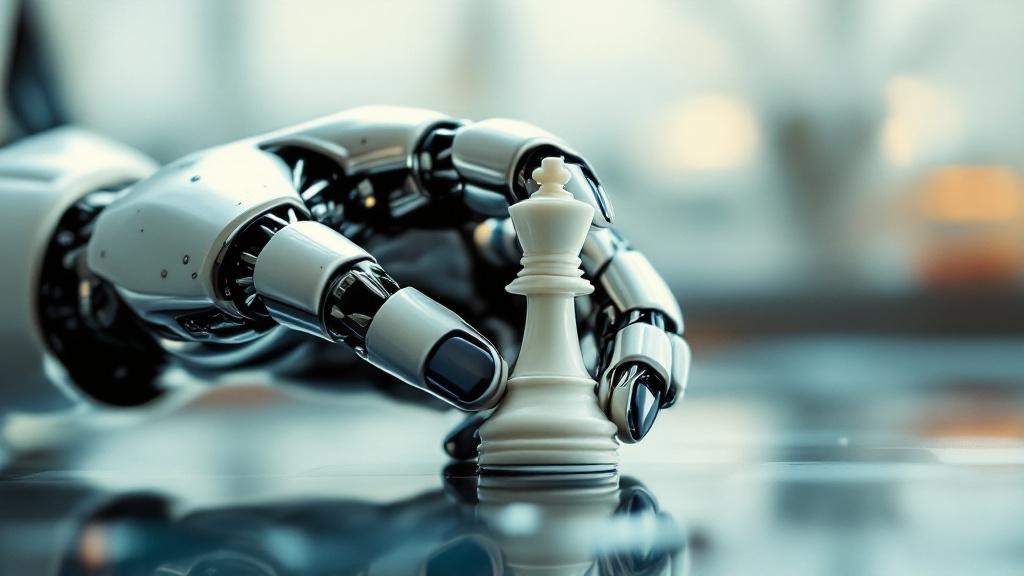
Chess programs once relied on human grandmaster games. Now they can master the game from scratch. They play against themselves millions of times. Then they discover moves humans never imagined. That’s a profound shift. KREAblog has covered similar breakthroughs before.
Why This Approach Is Different
Traditional AI has a blind spot. It can only remix what humans already know. In contrast, self-learning systems can explore unknown territory. They’re not bound by our biases or limitations. So what happens when they tackle unsolved problems?
The potential applications are staggering. Drug discovery could speed up dramatically. Materials science might see new alloys we never imagined. Even mathematics could gain new theorems. But none of this comes without serious challenges.
The Massive Obstacles Facing AI Without Training Data
Let’s be honest here. This approach has worked in games. Games have clear rules and scores. But the real world? It’s messy. How do you reward a system for discovering biology? What counts as “winning” in open-ended research?
Furthermore, the compute costs are astronomical. Self-play training needs enormous processing power. Playing millions of games against yourself isn’t cheap. And scaling this to broader intelligence? Nobody knows if that’s even possible.
The Gap Between Games and Reality
Board games have complete information. You see all the pieces. Real-world problems rarely work that way. Medical research involves hidden variables. Physics experiments have noise. Social systems are chaotic and unpredictable.
Also, reinforcement learning struggles with sparse rewards. A drug might take years to show results. How does an AI stay motivated during that wait? Human researchers have intuition and patience. Machines need clearer feedback loops to function well.
Why Investors Are Betting Billions on AI Without Limits
The money flowing into this space tells a story. Venture capitalists see moonshot potential. If this works, it changes everything. So they’re willing to bet big on unproven theories.
But let’s be skeptical for a moment. Valuations in the billions seem disconnected from reality. These companies have no products yet. They have impressive researchers and bold claims. That’s enough for investors chasing the next breakthrough. History shows this pattern often ends badly.
The Star Researcher Effect
Big names attract big money. That’s true in AI and everywhere else. A famous scientist starting a company gets instant credibility. Investors don’t want to miss the next big thing. So they write massive checks on reputation alone.
Still, fame doesn’t guarantee success. Many star researchers have started companies that failed. The skills needed for breakthrough research differ from building products. Running a business requires entirely different talents.
Realistic Timelines Matter
Even optimistic projections suggest years before any results. Building “superlearner” systems takes time. Testing them takes longer. Commercializing them? That’s another challenge entirely. Patience is rare in tech investing.
Meanwhile, traditional AI keeps improving. Large language models get better each year. They might solve practical problems before self-learning catches up. The race isn’t just about elegance. It’s about results.
What This Means for the Future of Intelligence
Even if these ventures fail, they’ll push boundaries. The research will teach us something valuable. Understanding how machines can learn independently matters. It reveals clues about intelligence itself.
Yet we should temper our expectations. Revolutionary breakthroughs are rare. Most ambitious projects fall short of their claims. That’s not cynicism. That’s history. The hype cycle in AI runs hot right now.
Still, something about this feels different. Reinforcement learning has proven results in limited domains. Expanding those results seems plausible. Whether it leads to “superlearners” remains unclear. But the journey will be fascinating to watch.
The question isn’t whether AI can learn without us. It’s whether that learning will matter. Can machines discover knowledge we actually need? Will their insights be useful or just mathematically elegant? These questions don’t have answers yet. But billions of dollars are betting they will.
This article is for informational purposes only.