
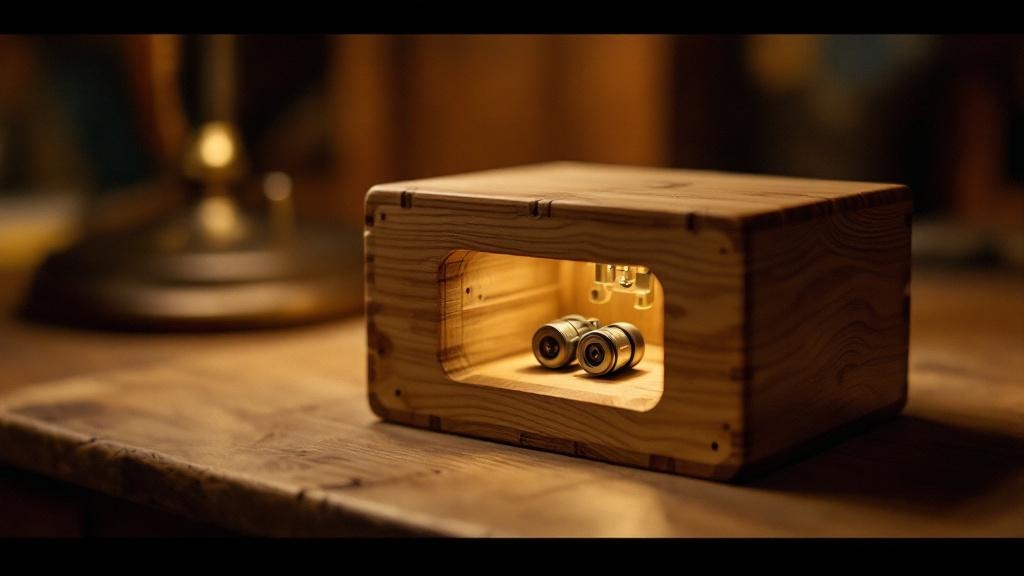
The computer mouse didn’t start as sleek plastic. It started as a rough wooden box with two metal wheels and a single button. Most people assume it came from a big tech lab. It didn’t. It came from one curious engineer’s mind in 1964. And the world almost never knew about it.
How the Computer Mouse Was Born
Douglas Engelbart built the first computer mouse at the Stanford Research Institute. He was trying to solve a real problem. Computers at the time required typed commands for everything. That was slow, frustrating, and limited. Engelbart believed people could work faster with a pointing device. So he built one from scratch.
The first prototype was nothing fancy. It was a small rectangular wooden shell. Inside sat two perpendicular metal wheels. As you moved it across a surface, the wheels tracked direction. A single button sat on top. It looked like a toy. But it worked.
Why They Called It a Mouse
The name came from the cord. That thin cable trailing behind the device looked exactly like a mouse’s tail. Engelbart’s team started calling it a mouse informally. The name stuck. Nobody ever trademarked it or made it official. It just became the word everyone used.
The Patent Nobody Profited From
Engelbart filed a patent in 1967. It was granted in 1970. Here’s the surprising part — he never made a cent from it. By the time the mouse became a consumer product, the patent had expired. The Stanford Research Institute also held the rights, not Engelbart personally. He received a one-time payment of ten thousand dollars. That’s it. One of the most important inventions in computing history earned its creator almost nothing.

The Demo That Changed Everything
The computer mouse stayed inside research labs for years. Then came December 9, 1968. Engelbart took the stage at the Fall Joint Computer Conference in San Francisco. What happened next is now called “The Mother of All Demos.” It wasn’t just about the mouse. But the mouse was the star.
Engelbart showed live video calling, collaborative editing, and hypertext links. He controlled everything with his wooden mouse. The audience sat in stunned silence. Some people cried. Others laughed out of disbelief. Nobody had ever seen a computer behave like this. It felt like science fiction happening in real time.
What Made the Demo So Shocking
In 1968, most computers filled entire rooms. They ran on punch cards. Nobody touched them directly. Engelbart sat at a screen, moved a cursor, and clicked on things. That was radical. It felt almost illegal somehow. The gap between what existed and what he showed was enormous. Even the tech people in the room struggled to process it.
Why It Took So Long to Reach Consumers
The demo was a sensation. But the mouse didn’t reach homes for another fifteen years. Early versions were expensive to make. Also, no affordable personal computer existed yet to pair it with. The technology needed to catch up. Meanwhile, Engelbart watched others build on his work without credit. That’s a painful thing to sit with.
It was Xerox PARC that finally refined the mouse in the 1970s. Their version used a rolling ball instead of wheels. Then Apple picked it up. Their 1984 Macintosh brought the mouse to everyday consumers. Suddenly everyone needed one. But even then, most people had no idea where it came from.
What the Mouse Actually Changed
Before the mouse, computers belonged to specialists. You needed training. You needed to memorize commands. The mouse changed the entry point. Now anyone could point at something and click. That sounds simple. But it completely opened computing to billions of people who would never have typed commands.
The mouse also changed how software was designed. Developers could now build visual interfaces. Icons replaced text commands. Menus appeared. Windows opened and closed. All of that depends on the mouse as a baseline assumption. Without it, the graphical interface doesn’t exist as we know it. And without that, the modern internet looks completely different.
Today’s wireless mice, trackpads, and touchscreens all trace back to that wooden box. Even styluses and trackballs share the same core idea. Move something physically. Make something happen digitally. Engelbart figured that out in a modest lab with metal wheels and a piece of wood. Not bad for a Tuesday.
At KREAblog, we think Engelbart deserves far more credit than history gave him. He didn’t just invent a device. He invented a relationship between humans and machines. That relationship now defines how billions of people live and work every single day.
So next time you move your cursor across a screen, remember the wooden box. Remember the tail-like cord. Remember a man in 1964 who believed computers could be more human. He was right. And almost nobody paid him for it.
This article is for informational purposes only.