

The story of computer-generated music begins not in a recording studio. It begins inside a giant, room-sized machine in Manchester, England. The year was 1951. And nobody at the time fully understood what they had just witnessed.
Most people think electronic music started in the 1970s. They picture synthesizers and disco. But the real origin is far stranger. It involves a mathematician, a cricket game, and a machine that filled an entire building.
This is the story of how a computer first made music — and why almost nobody remembers it correctly.
The First Computer-Generated Music and How It Happened
In 1951, the Ferranti Mark 1 computer sat at the University of Manchester. It was one of the earliest commercial computers ever built. It was not designed for music. It was designed for serious mathematics and code-breaking work.
Christopher Strachey was a schoolteacher and brilliant amateur programmer. He had already used the machine to write a checkers-playing program. But then he pushed it further. He programmed the Ferranti Mark 1 to play musical notes. The computer buzzed and clicked out a recognizable tune.
That tune was God Save the King. It was followed by Baa Baa Black Sheep. Both songs came out of a machine that had no speakers. The sound came from the computer’s own internal hardware vibrations. Engineers used a nearby radio receiver to capture and amplify the signal.
The BBC recorded this moment in June 1951. That recording still exists today. It is the oldest known recording of computer-generated music in human history.
The Machine That Hummed
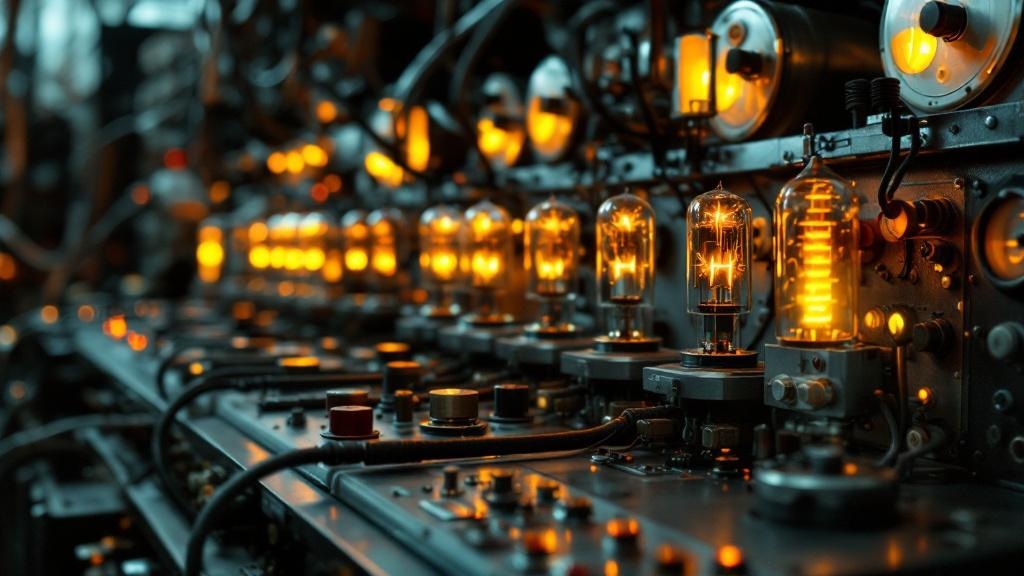
The Ferranti Mark 1 was not musical by any stretch. It had no sound card. It had no audio output. But every operation it performed created tiny electrical pulses. Those pulses caused physical vibrations in the hardware. Strachey figured out how to control the timing of those pulses. By doing that, he could control pitch.
It was not elegant. But it worked. The machine was essentially singing through its own body.
The Man Behind the Music
Christopher Strachey never got the credit he deserved. He was not an academic at the time. He was a schoolteacher from Radlett. He had taught himself to program by reading a technical manual over a weekend. Later in life, he became a respected computer scientist. But in 1951, he was just a curious outsider pushing a machine beyond its limits.
Alan Turing had also worked on the Manchester computer. Some early accounts accidentally gave Turing credit for the music program. But historians have since confirmed it was Strachey’s work. Turing was nearby. Strachey was the one writing the code.
Why This First Changed Everything in Music and Technology
At first, nobody thought this was important. It seemed like a party trick. A computer playing Baa Baa Black Sheep was funny. It was not serious science. Most engineers moved on quickly.
But the idea did not disappear. It spread slowly through the academic world. By the late 1950s, researchers at Bell Labs in the United States had taken it much further. Max Mathews wrote a program called MUSIC. It was the first software designed specifically to produce sound. He is often called the father of computer music for this reason.
Then came the synthesizers of the 1960s and 1970s. Then digital audio workstations. Then music software on home computers. Then auto-tune. Then AI-generated songs. Every single one of those steps traces back to that crackling BBC recording from 1951.
The Butterfly Effect on Modern Sound
Today, almost all music involves computers at some stage. Producers use software to mix tracks. Artists use digital instruments to write melodies. Streaming platforms use algorithms to suggest songs. None of this existed before someone made a computer hum God Save the King.
The music industry today is worth over $28 billion globally. A huge portion of that depends on digital music creation tools. Those tools all descend from the same strange experiment in Manchester.
At KREAblog, we often talk about how small firsts lead to massive industries. This is one of the best examples in history.
The Recording That Almost Disappeared
For decades, that 1951 BBC recording sat in an archive. Very few people knew it existed. Then in 2008, researchers at the British Library found it. They digitized it carefully. They cleaned up the audio as best they could. And they published it online for the world to hear.
It sounds rough. It sounds nothing like modern music. But when you hear it, something clicks. You are listening to the very first moment a machine made a sound on purpose. That is not a small thing.
What the First Computer-Generated Music Tells Us Today
There is a lesson buried in this story. The people who created the first computer music were not musicians. They were not trying to build an industry. They were just curious about what a machine could do.
Strachey did not patent his idea. He did not start a company. He moved on to other problems. But his small experiment planted a seed that grew into the entire digital music world we know today.
AI music tools are now writing full songs without human input. Some of those songs are getting radio airplay. The debate about what counts as real music is loud and ongoing. But if you want to understand where all of this started, go listen to that crackly 1951 recording.
A schoolteacher. A room-sized computer. A children’s song. That was the beginning. KREAblog thinks that’s honestly one of the best origin stories in tech history. Not polished. Not planned. Just someone asking: what if?
The world of sound has never been the same. And it all started with a machine that was never supposed to sing. Explore more unexpected tech origin stories at KREAblog.
This article is for informational purposes only.