

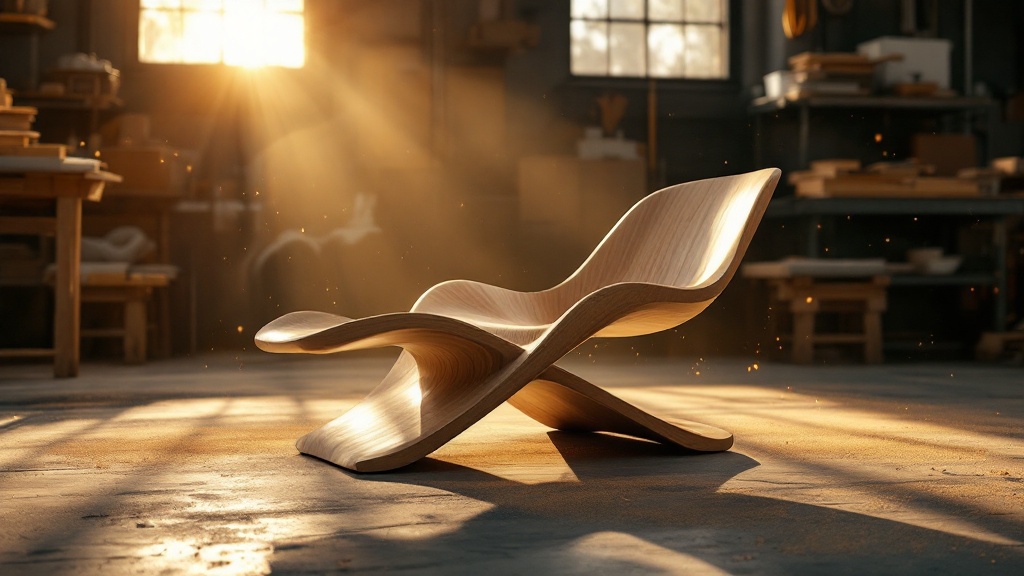
Artificial wood has quietly become one of design’s most interesting plot twists. For decades, we chased authenticity in furniture. We wanted real grain, natural imperfections, honest materials. But here’s the thing. Engineered wood alternatives now offer possibilities that nature simply can’t match.
Why Artificial Wood Matters in Modern Design
Let’s get something straight. This isn’t about cheap imitation anymore. Today’s artificial wood materials behave in ways traditional lumber never could. They bend. They melt. They fuse together without screws or glue.
Heat-pressed composites can form organic joints that look grown, not built. That’s genuinely fascinating. Traditional woodworking needs mechanical connections. These new materials create molecular bonds instead. The joint becomes part of the piece itself.
Beyond the Imitation Game
Old-school fake wood tried desperately to copy the real thing. It always failed. However, smart designers stopped playing that losing game. They embraced what synthetic materials do differently.
Natural wood has rules. Grain direction matters. Knots create weak points. Moisture warps everything. Engineered alternatives follow different rules entirely. So designers can finally break free from centuries-old limits. This shift changes everything.
The Heat-Press Revolution
Here’s where it gets interesting. Heat-pressing transforms rigid materials into moldable forms. Apply enough temperature, and the material flows. Then it sets into permanent organic shapes.
Think about that for a moment. Furniture joints that look like they melted together naturally. No visible hardware. No assembly required. Just continuous, flowing forms. KREAblog has covered similar innovations before. Yet this feels particularly promising.

The Creative Potential of Artificial Wood
Traditional furniture making is subtractive. You start with a log. You remove material until something useful remains. That’s wasteful by nature. Modern composites flip this entirely.
Designers now build up instead of cutting down. They add material exactly where strength is needed. Nothing wasted. Forms emerge that would take master carvers months to achieve. Even then, those hand-carved pieces would eventually crack.
Organic Forms Without the Organic Problems
Natural wood moves constantly. It swells in humidity. It shrinks in dry conditions. Joints loosen over time. Your grandmother’s antique table wobbles for good reason.
Artificial materials stay stable. They don’t care about weather. The organic-looking curves remain exactly as designed. Forever. That stability opens creative doors that were always locked before.
Sustainability Questions Worth Asking
Is synthetic better for the planet? That’s complicated. Real wood sequesters carbon. But logging destroys forests. Composites use energy to produce. Yet they last longer.
The honest answer? It depends on specific materials and methods. Some artificial wood uses recycled content. Others need virgin plastics. Designers must ask hard questions about their choices. Easy answers don’t exist here.
What This Means for Future Furniture
We’re witnessing a genuine material revolution. Not the flashy kind with press releases. The quiet kind that changes how things get made.
Young designers increasingly choose engineered materials. They’re not apologizing for it either. Why would they? These materials perform better for their specific visions.
Traditional craftsmanship won’t disappear, though. It’ll become more specialized. More precious. More expensive. Meanwhile, artificial alternatives will become mainstream. Both will coexist, serving different needs and different buyers.
The furniture in your future home might look impossibly organic. Flowing joints that seem grown from single pieces. Curves that defy woodworking logic. All made possible by materials that embrace their artificial nature.
That’s not a compromise. That’s progress. And honestly? It’s pretty exciting.
This article is for informational purposes only.