

The First Banner Ad That Changed the Web Forever
On October 27, 1994, something tiny appeared on a webpage. It was small, colorful, and strange. Most people had never seen anything like it. That little rectangle was the first banner ad on the internet. It lived on a site called HoloNet, but the famous one appeared on Wired Magazine’s website, HotWired. This single moment split the internet into two eras. Before ads, and after them. Nothing about the web would ever be the same again.
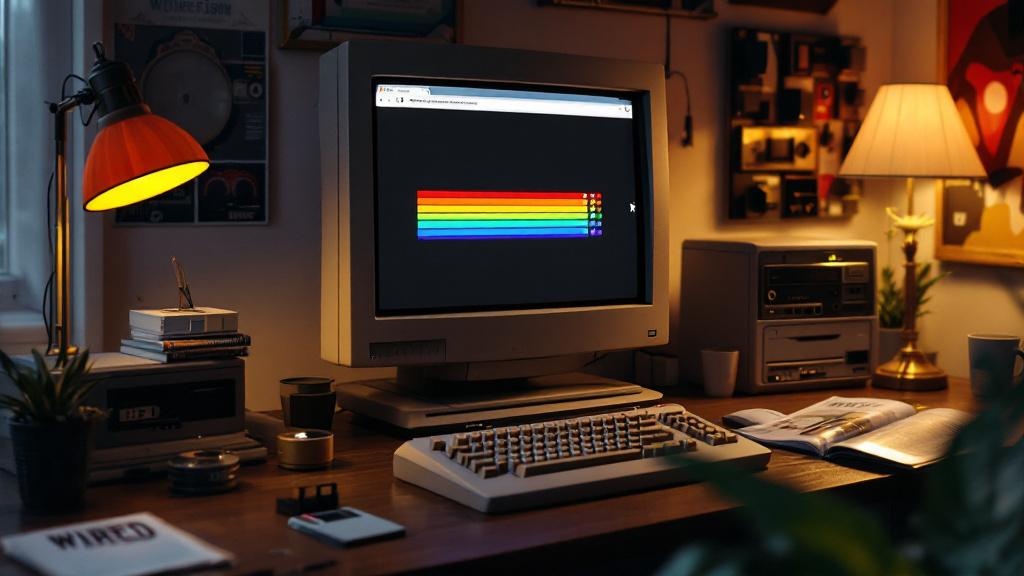
The ad was simple. It showed rainbow-colored text on a black background. The words asked a bold question: “Have you ever clicked your mouse right HERE?” Then it added an arrow and dared viewers: “YOU WILL.” The advertiser was AT&T. And surprisingly, about 44% of people who saw it actually clicked on it. Today, the average click rate for banner ads is about 0.05%. That original ad performed almost 900 times better than today’s ads. Let that sink in.
Why HotWired Was the Perfect Stage
HotWired was the online version of Wired Magazine. It launched in 1994 as one of the first commercial web magazines. The team needed money to keep it running. So they came up with a wild idea. Why not sell space on the webpage? They approached big companies like AT&T, Volvo, MCI, and others. These brands each paid about $30,000 for a 12-week placement. Nobody knew if it would work. But the team at HotWired believed the web was the future of media. They were right.
The Person Behind the Idea
Joe McCambley was the creative mind behind that AT&T ad. He worked at the agency Modem Media. Years later, McCambley admitted something funny. He said the ad didn’t even link to AT&T’s products. Instead, it took users on a virtual tour of famous art museums. The goal wasn’t to sell phone plans. It was to make AT&T look cool and forward-thinking. In many ways, this was the birth of content marketing online. A brand paying to give you an experience, not just a sales pitch.
How the First Banner Ad Shaped Modern Advertising
That small rectangle opened a massive door. Within months, other websites started selling ad space too. By 1995, companies like Yahoo and Netscape carried banner ads everywhere. Advertisers suddenly had a new playground. They could reach millions of people sitting at their computers. The economics of the internet changed overnight. Free content became possible because ads could pay for it. Think about that. Every free article, video, and social media feed you enjoy today exists partly because of that 1994 experiment on KREAblog and sites like it across the web.

The Rise of the Ad-Supported Web
Before banner ads, nobody had a clear business model for websites. Some people thought the internet would stay academic forever. Others imagined subscription-only content. But ads offered a third path. Websites could give away content for free and make money from advertisers. This model powered the growth of Google, Facebook, and YouTube. All of them built empires on advertising money. And it all started with that tiny rectangle in 1994. The ad-supported web is now worth over $600 billion per year globally.
Banner Blindness and the Backlash
Of course, the story isn’t all rosy. By the late 1990s, banner ads were everywhere. People started ignoring them completely. Researchers even gave this a name: banner blindness. Users trained their eyes to skip over anything that looked like an ad. Click rates dropped dramatically year after year. Pop-up ads followed, making things even worse. Then came ad blockers. Today, over 40% of internet users block ads on their browsers. The very thing that funded the web became the thing users wanted to escape. That’s quite an ironic twist.
Surprising Facts About the First Banner Ad Era
Here’s something most people don’t know. The original AT&T banner ad file was incredibly tiny. It was only 468 pixels wide and 60 pixels tall. That exact size became the industry standard for years. Web designers everywhere called it the “full banner” format. Also, the ad had no tracking pixels or cookies attached. Nobody measured user behavior after the click. Today, a single ad can track your location, browsing history, and purchase habits. The difference between 1994 and now is staggering.
The Cost of Early Internet Ads
Those first ads on HotWired cost about $30,000 each. But there was no real way to measure success. Advertisers simply trusted that people were seeing them. The concept of CPM, or cost per thousand views, came a bit later. Craig Kanarick, an early web designer, once said those first ads felt more like art projects than marketing. Brands were experimenting. They didn’t have data or analytics dashboards. They just had curiosity and a willingness to try something completely new. That spirit of experimentation built the digital advertising world we know today.
Where Is That Original First Banner Now?
The original AT&T banner ad no longer lives on any active website. However, it has been preserved in internet history archives. Several museums of digital culture have featured it. Joe McCambley has spoken about it at many conferences. He even expressed regret about creating it. In a 2013 interview, he said he was sorry for starting the flood of annoying ads online. Still, his creation remains one of the most important moments in web history. Without it, the internet economy might look completely different today. You can explore more surprising firsts at KREAblog.
The Legacy of a Tiny Rectangle
It’s hard to believe that a small, colorful box changed everything. But it did. The first banner ad proved that the internet could make money. It showed brands a new way to reach people. It created an entire industry worth hundreds of billions. And it also created problems we still deal with today. Privacy concerns, ad fatigue, and data tracking all trace back to that moment. Love them or hate them, banner ads shaped the modern web. Every time you scroll past an ad, remember where it all began. A bold little rectangle on HotWired, daring you to click.
The internet before 1994 was quiet and mostly academic. After that first banner ad, it became commercial, chaotic, and endlessly creative. That’s the power of a single first. One small idea can reshape an entire world. For more stories about the moments that changed technology forever, visit KREAblog.
This article is for informational purposes only.